From Booths To Breakthroughs
September 15, 2026
 For many students, internships are the moment when classroom learning begins to connect with real-world careers. Recognizing how important this experience can be, Seed Your Future has released a new Student Internship Guide designed to help horticulture students find meaningful opportunities, prepare for the application process, and make the most of their internship experience.
The guide was developed to support students at every stage of their internship journey – from the first question of “Where do I start?” to successfully completing an internship that helps shape their career path.
Internships play a critical role in helping students translate academic knowledge into professional skills. By working alongside industry professionals, students gain hands-on experience that strengthens their resumes and builds confidence in their abilities. Just as important, internships give students the chance to build relationships with mentors and colleagues who can offer guidance, advice, and professional connections throughout their careers. In horticulture, where networking and industry relationships are especially valuable, these connections can open doors to future opportunities.
The experience also allows students to explore different career paths within the diverse horticulture industry. A student who initially plans to pursue one area of horticulture may discover a new passion while working in a greenhouse, research lab, botanical garden, nursery operation, or landscape business. Even when an internship helps a student realize what they don’t want to do long term, that insight can be just as valuable in shaping their professional direction.
 Data from the Seed Your Future and North Carolina State University internship survey reinforces the importance of these experiences. The majority of horticulture alumni ranked internships among the most valuable components of their resumes, alongside work history and professional references. In fact, 93 percent of alumni reported having a positive internship experience and gave their internship an average rating of 4.5 out of 5.
These findings highlight how meaningful a well-structured internship can be in launching a career.
The new guide also helps clarify what an internship actually looks like within the horticulture field. Internships are typically part-time or full-time work experiences related to a student’s major or career interests. Some are designed for early exploration, giving students exposure to the industry and helping them identify areas they want to pursue further. Others are more specialized and are intended for students who are nearing graduation and want to gain deeper technical experience that prepares them for a specific career path.
 Because horticulture encompasses such a wide range of careers – from plant science and production to business management, marketing, research, and public gardens – the possibilities for internships are equally broad. The guide encourages students to begin their search by connecting with faculty advisors, attending career fairs, and using industry resources such as the Seed Your Future internship website.
Preparation is another key theme of the guide. While students often focus on technical horticulture knowledge, employers consistently emphasize the importance of professional skills as well. Communication, teamwork, organization, problem solving, reliability, and professionalism are all qualities that employers value highly. Developing these skills before and during an internship can help students stand out and succeed in the workplace.
Once a student secures an internship, the learning process truly begins. The guide encourages students to treat the experience as more than just a temporary job. Setting personal learning goals, documenting new skills, and actively seeking feedback from supervisors can turn an internship into a transformative professional experience. Many employers view internships as extended interviews, and students who demonstrate initiative, enthusiasm, and a strong work ethic may even receive full-time job offers after graduation.
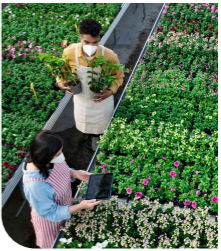 Ultimately, the Seed Your Future Student Internship Guide is designed to empower students with the knowledge and confidence they need to take the next step in their careers. By providing practical advice and clear guidance, the resource helps students navigate the internship process and discover the many opportunities available within the horticulture industry.
For students exploring their future in horticulture, the journey often begins with a single experience. A well-chosen internship can be that starting point – offering hands-on learning, professional connections, and a clearer vision of the career path ahead. Seed Your Future’s new guide aims to make that first step easier and more accessible for the next generation of horticulture professionals.

Anna Caroline Ball is President and CEO of the 111-year-old Ball Horticultural Company, which specializes in all aspects of horticulture, including breeding, biotechnology, production, and marketing of hybrid flower seeds and other floriculture crops. Privately-held and now in its third generation of family management, Ball Horticultural Company is located in over 20 locations worldwide.
Anna received her B.A. degree from the University of Colorado and her M.B.A. from Northwestern University. She is a Trustee for The Morton Arboretum, and is also Director of the Board of Career Vision. Anna lives in Glen Ellyn, Illinois.

John M. Dole is Associate Dean and Director of Academic Programs at North Carolina State University and past Chairman of the Board of the American Society for Horticultural Science. John began a lifelong interest in horticulture by working at a local farm market, growing cut flowers in his garden for sale, and picking strawberries, raspberries, apples, and pears for local commercial operations.
He received a B.S. degree from Michigan State University and his Ph.D. from the University of Minnesota, both in the area of Horticulture. He began his academic career as an Assistant Professor in the Department of Horticultural Science and Landscape Architecture at Oklahoma State University. Dr. Dole moved to the Department of Horticultural Science at North Carolina State University in 2000, becoming Director of Graduate Programs in 2004 and Department Head in 2011.
He has a long history of significant research, teaching, extension, and outreach contributions to the field of floriculture, most notably in the areas of production and postharvest handling of cut flowers, cuttings and poinsettias. His students have excelled in a variety of industry, public garden, governmental, or academic positions. As Department Head he focused on student recruitment into horticulture and spreading the word about the benefits of horticulture.
Dr. Dole specializes in floricultural crops research and teaches floriculture courses including Greenhouse Management, HS 440, and Production of Floriculture Crops, HS 442 . In addition, he serves as Executive Advisor for the Association of Specialty Cut Flower Growers, and co-authored Floriculture Principles and Species, 2nd edition, 2005, with Harold F. Wilkins.
Dr. Dole has been involved with the Seed Your Future movement since it's founding in 2014. He was an inaugural member of the Steering Committee, and served on the Advisory Council until late 2018 when he joined the National Leadership Cabinet.

Terri McEnaney became president of Bailey Nurseries in 2001. Along with six other fourth-generation Bailey family members, she is responsible for carrying on the family tradition of growing the company.
While Terri grew up around the business and worked at the nursery while she was in high school, when she went to college she got a business degree with an emphasis on accounting. Upon graduation she went to work in the corporate world at 3M for eight years.
Working at a large multinational conglomerate, McEnaney says, provided her with a great foundation for the business world that she would eventually apply to the horticulture industry.
McEnaney returned to the company in 1991 with a whole new perspective on the family business.

Kate leads, directs and manages day-to-day activities for SAF and is responsible for developing the overall strategic positioning for the organization. She joined SAF in 1987 as a writer and editor, and then held positions as editor-in-chief, publisher, vice president of publishing and communications, and chief content and publishing officer. Kate has a B.S. in journalism from Bowling Green State University.

Gustavo Carranza currently serves as the Senior Irrigation Manager at the Wonderful Orchards division
based in Firebaugh, California. Coming from a multi-generational farming family, Gustavo has always
had a passion for agriculture which has led him to follow his current career path. In his current role, he
enjoys implementing creative and innovative techniques to improve farming efficiency and develop
solutions for several industry challenges. Additionally, during his time with Wonderful Orchards,
Gustavo has served as an advocate of Health & Wellness initiatives and has hosted High School and
College students for job shadow opportunities and internships.
Gustavo received his Bachelor of Science degree in Agricultural Business with a minor in Precision
Agriculture Technology from California State University, Fresno

Ryan Hall is a seasoned professional with over 20 years of experience in the horticulture industry. As the Head of Syngenta Flowers America's region, he plays a key role in driving business growth and setting strategic direction. With a Bachelor of Science in Environmental Horticultural Science from California Polytechnic State University, Ryan brings a wealth of expertise in plant genetics. He enjoys sharing valuable insights on product development, market trends, and the transformative power of innovative plant genetics.

Chris Drummond, AAF, PFCI is a third-generation florist and president of Penny’s by Plaza Flowers in Philadelphia, Pennsylvania. He earned a degree in Economics and Business Administration from Ursinus College and has guest lectured at the University of Delaware and Penn State University. Chris is a past-president of The PA Floral Industry Association and the Society of American Florists.

Julie Caulfield is the Director of Business Operations at BioWorks as well as an officer of the company. She has been with BioWorks since 2000. As Director of Business Operations, Julie is responsible for achieving operational efficiency and productivity plans for the company. She leads the following departments: Finance, Customer Service, Technology, Manufacturing, Quality, Logistics and Facilities.
Before being named Director of Business Operations, Julie was BioWorks Director of Customer Experience and was responsible for leading the customer service team, ensuring accurate, timely and complete order processing, managing customer feedback through NPS surveys and customer success through onboarding customers. She also collaborated with multiple departments, channel partners and customers.
Prior to being Director of Customer Experience, Julie was the company’s Business and Administrative Manager, leading day-to-day operations for Finance, Customer Service and Technology.
Julie earned her Bachelor of Science degree in Business Administration from SUNY Geneseo and her Associate in Science in Business Administration from Finger Lakes Community College.
Julie has also served as Treasure of the Board for The Coordinated Child Development Program for 6 years.

Kay Chubbuck is Vice President of Engagement and Learning at Longwood Gardens. In this role, she leads the 78-person department and oversees the strategic development of Longwood’s award-winning in-person, online, and community-based educational and training programs, which have attracted and engaged learners of all ages from around the globe since 1956. With more than two decades of experience in creating and implementing educational experiences, Chubbuck has previously served as Vice President for Education at the New York Botanical Garden (NYBG) and Director, Global Online for Sotheby’s Institute of Art.
Chubbuck holds doctoral and master’s degrees in English Literature from the University of Oxford, where she was a Rhodes Scholar. She also holds an MS in Journalism from Northwestern University and a BA in English and Comparative Literature from Columbia University. Beyond her professional achievements, Chubbuck volunteers with East Coast Cherokees. She is a founding member and board member of the official Cherokee Nation satellite community for At-Large citizens in New York, New Jersey, Pennsylvania, and Delaware where she serves on the IT and Youth Activities committees.

Makenzie Pellissier is the Intellectual Property Manager at Proven Winners, with a varied background working in academic, government, and industry settings.
Makenzie received her B.S. in Environmental Science at the University of New Hampshire and her M.S. in Agronomy at the University of Wyoming. From there she worked as an assistant research scientist in an Agroecology lab at UW, focusing on pest management and organic curriculums. When life took her back to New Hampshire, Makenzie was introduced to the horticulture industry in her role as a Trial Manager at Pleasant View Gardens where she helped select new varieties for Proven Winner’s annual assortment. From there she went on to work for the USDA Natural Resource Conservation Service, as a soil conservationist.
Now she is happy to be back with the Proven Winner’s Product Development team as their Intellectual Property Manager. She lives in central New Hampshire with her family.

Broch Martindale National Nursery & Greenhouse Strategic Account Manager
Growing up in the family greenhouse business is where Broch found his passion for plants and this industry. Broch studied greenhouse production at Ohio State and returned home to the family business before searching for his next challenge. Broch joined Dow AgroSciences what is now Corteva 10 years ago. Broch focused his work on IPM and greenhouse technology. He recently took on the role of National Nursery & Greenhouse Strategic Account Manger to work with the industry he loves so much. Broch continues to serve on the AmericanHort Greenhouse connector group.
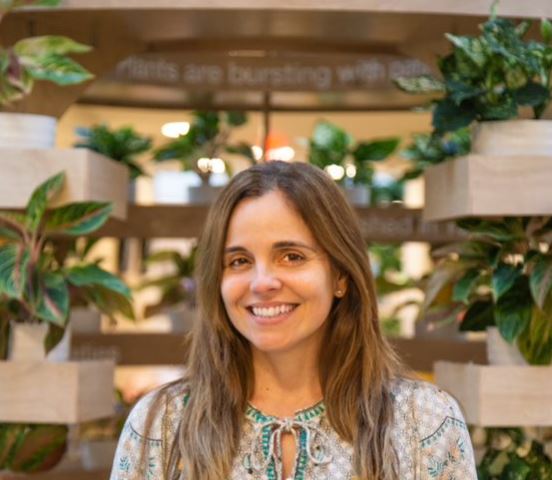
Mari Carrasquillo is a seasoned Executive Marketing Professional born and raised in Puerto Rico, with over 25 years of experience driving brand strategy, digital innovation, and eCommerce growth across domestic and international markets. I have led transformative initiatives for iconic brands including Whirlpool, KitchenAid, HP, Johnson & Johnson, Mr. Coffee, Crock-Pot, and Calphalon.
I'm currently serving as the VP of Marketing at Costa Farms, where I have been steering the company’s evolution into a digitally savvy, consumer-first horticultural powerhouse for the past four years.
I earned my BBA in Marketing and Communications from the University of Puerto Rico and have since become a recognized thought leader in the marketing industry. I had the opportunity to spoken at prestigious events such as the Internet Retailer Conference & Exhibition (IRCE) in 2016 and The Marketing Forum at The Harvard Club in New York City in 2023. In the recent years I'm very proud to be recognized with marketing accolades including:
Beyond my professional achievements, I'm deeply passionate about nutrition and food equality. I'm an actively volunteers with organizations like Miami Rescue Mission and Feeding South Florida, contributing my time to causes that uplift the community.
I enjoy traveling, biking, and spending sunny days at the beach with my husband and two daughters.
Dr. Leonardo Lombardini is Professor and Head of the Department of Horticulture at the University of Georgia – one of the nation’s leading horticulture programs – where he provides strategic leadership for academic programs, research initiatives, and outreach activities aimed at strengthening the horticulture workforce. He brings more than two decades of experience spanning higher education, international agriculture, and industry-relevant research.
Dr. Lombardini is an internationally recognized scholar, having authored or coauthored 65 peer-reviewed publications and delivered more than 100 presentations worldwide. His research program focuses on plant physiological responses to abiotic stress, with particular emphasis on woody ornamentals, fruit crops, and specialty crops. His work has advanced understanding of plant adaptation to challenging environments and has contributed to more sustainable horticultural production systems. Dr. Lombardini’s scholarship has been supported by competitive funding and has had broad relevance across academic, industry, and international contexts. His work has informed both academic audiences and stakeholders across the horticulture value chain.
Equally central to Dr. Lombardini’s career is education and workforce development. He has taught a wide range of undergraduate and graduate courses and has mentored numerous students who now hold leadership, research, and technical positions in industry, academia, and public service. He has been deeply engaged in experiential learning, study-abroad programs, and interdisciplinary training designed to attract and prepare the next generation of horticulture professionals.
Dr. Lombardini has held multiple leadership roles, including serving as the founding Director of the Center for Coffee Research and Education at Texas A&M University, where he worked closely with producers, industry partners, and international organizations to address global supply-chain challenges. His leadership and service have been recognized with several honors, including the 2025 Outstanding Leadership and Administration Award from the American Society for Horticultural Science (ASHS), the 2012 J. Creighton Miller, Jr. Distinguished Educator Award, and the 2025 Paul Smeal Leadership and Administration Award from the Southern Region American Society for Horticultural Science (SR-ASHS).
Dr. Lombardini is committed to advancing horticulture through education, outreach, and strategic leadership and is eager to contribute these perspectives in service to Seed Your Future’s mission.

Jared Barnes, Ph.D. started gardening when he was five years old, and since then he has enthusiastically pursued how to best cultivate plants and cultivate gardeners. He currently fulfills those passions as an assistant professor of horticulture at Stephen F. Austin State University in Nacogdoches, TX
He obtained his Ph.D. in horticultural science from North Carolina State University in Raleigh, NC; he participated in a summer internship at The Scott Arboretum of Swarthmore College in Swarthmore, PA; and he has travelled around the US and to eleven countries to gain a national and global perspective of horticulture
His passion has been recognized by peers with being named the 2016 Perennial Plant Association Young Professional of the Year, recognized in the 2016 GPN Class of 40 under 40, and in interviews in Organic Gardening, Greenhouse Grower, AmericanHort Connect, Ken Druse's Real Dirt, and Nursery Management. His articles have appeared in Fine Gardening and Carolina Gardener.

For the past 14 years Mark Broxon has served as the Executive Director of Proven Winners, the leading plant brand in North America. His responsibilities include leading the development of the Proven Winners brand, long term planning, administration, and financial management. His background includes almost 30 years experience in agriculture and horticulture markets.
Before joining Proven Winners, Mark was principal with Growth Partners, a consulting firm providing marketing and management services to the industry. Prior to this, he was the General Manager for the Western Business Division of The Scotts Company.

Debi joined the American Floral Endowment (AFE) in 2008, and serves as the Executive Director overseeing scientific research projects, educational grants, and scholarships. She also administers three internship programs to assist young professionals entering the floral industry. Since 1961, AFE has funded more than $16 million in research, grants and scholarships/internships. Prior to joining AFE, Debi worked for the Society of American Florists for nine years.
Debi also serves as the Executive Director of the Floral Marketing Research Fund, an organization that funds consumer and market research projects to support and promote floral consumption.
With more than 25 years experience working with non-profit organizations, Debi specializes in administration, communications, marketing, fundraising and member relations. She is a member of the American Society of Association Executives, and the Association of Fundraising Professionals.


Kimberley Lough was an Environmental Consultant before landing an Agriscience teaching position in a Title 1 middle school in southwest Florida 14 years ago. A self-pronounced plant geek who could spend all of her time in the rainforest, she chooses to bring beauty to life for the average of 150 students each year in her urban agriculture and FFA program. She graduated from Western Carolina University, and received a Master's Degree in Geology from the University of South Carolina.
Her passion is introducing youth and community members to the wild world of plants and animals, offering opportunities to experience them in the food desert of where she teaches. Her agricultural program includes aquaculture, hydroponics, vegetable and herb gardens, ornamental nursery production, rabbits, layer hen operations, llamas, dairy calves and market hog production. Her students also recycle their cafeteria's kitchen waste through both traditional and worm composting methods and their chickens, turkeys, and rabbits drink from rainwater collection systems.
The National FFA Organization selected her program as one of the Top 5 Outstanding Middle School programs 3 years in a row, and as a Model of Innovation in 2015. They also won 1st and 2nd place statewide honors in 2014 and 2015 in the campaign "Helping Communities Grow" sponsored by Nutrients for Life Foundation.

Dr. Mary Hockenberry Meyer is a professor emeritus in the Department of Horticultural Science at the University of Minnesota and the Grass Curator for the Grass Collection at the Minnesota Landscape Arboretum. She is a past president of the American Society of Horticultural Science and is chairman of the Board in 2014 and 2015. She joined the U of MN faculty in 1994 and has primarily an Extension/outreach and research appointment. Her research interests include native and ornamental grasses, including propagation and production of grasses, cold hardiness, and sustainability of grasses for landscaping, especially in northern climates. She teaches international classes, the Minnesota Landscape Arboretum internship program, and plant identification. She obtained her Ph.D. from the University of Minnesota in 1993, in Plant Breeding and Genetics, her M.S. from Cornell University, and her B.S. from Clemson University.

Matt is the President of the Pennsylvania Horticultural Society. He grew up in Mercersburg, a small town in south central Pennsylvania, where he attended Mercersburg Academy, and was a frequent visitor to the Philadelphia Flower Show. He earned his BA in architectural history, which remains a personal passion, from the University of Virginia in 2001, and completed his MBA at the Wharton School, University of Pennsylvania, with honors in 2011.
Matt launched a historic preservation consultancy after graduation in 2002, and quickly landed at the Fairmount Park Historic Preservation Trust where he collaborated closely with critical foundation partners, the City of Philadelphia, and individual park supporters to preserve the park system's historic buildings and landscapes. In 2005, Matt relaunched and revitalized the East Passyunk Avenue Business Improvement District, serving as Executive Director for two years, before moving to the Urban Land Institute in Washington, DC in 2007, where he advised cities across the country on regeneration, transit-oriented development, place making and sustainability strategies. Matt has a lifelong passion for improving the urban environment, and under his leadership PHS is primed to expand its programs that create more beautiful and sustainable communities in the years ahead.

Jennifer Schwarz, Ph.D., serves as the vice president of learning and engagement for the Chicago Botanic Garden. In this role, she oversees the Garden’s adult and children’s education offerings, the Budburst community science program, interpretation, and the urban agriculture, Windy City Harvest, and horticultural therapy programs.
Since starting at the Garden in 2005 as the Garden’s education manager, Schwarz has worked to ensure that in our increasingly urban world, people of all ages, abilities, and backgrounds have access to green space and to high quality nature-based education and enrichment programs, both on Garden grounds and in their own communities. She is passionate about environmental justice, the need for engagement and action focused on climate change, and the very judicious use of technology to increase access to nature.
Schwarz joined the Garden after completing her doctorate in the learning sciences at Northwestern University. Before attending graduate school, she worked for a nonprofit housing development firm to increase and improve housing opportunities for low- and moderate-income households and special-needs populations in Westchester County, N.Y., and then for a variety of nonprofits in the areas of marketing and membership development. She lives in the northern suburbs, where she spends most of her off-time growing her own gardens and looking after two precocious cats.

Casey began serving as the H.O. Smith Endowed Director in August 2022. He has a master of science degree and a doctorate in entomology from Colorado State University, and a bachelor of science degree in ornamental horticulture from California Polytechnic State University, San Luis Obispo.
Casey’s experience in horticulture spans almost three decades. As executive director of the American Public Gardens Association from 2011–2022, he served over 600 public gardens throughout the U.S., Canada, Mexico, and more than 20 other countries. Prior to that appointment, he spent 15 years leading plant health care efforts at Longwood Gardens in Kennett Square, PA, including soils and compost, IPM, land stewardship, and other sustainability programs. He is currently board vice president of the Xerces Society for Invertebrate Conservation and was the recipient of the American Public Gardens Association’s Professional Citation in 2011. Since his arrival at Penn State, Casey has also been appointed an affiliate professor in the Department of Entomology in the College of Agricultural Sciences.
Casey enjoys developing partnerships that benefit the growth and development of professionals in the horticulture industry, and help preserve, conserve, and grow gardens and habitats.

Lisa Smith works for Johnson's Nursery as a Horticulturist and Wholesale Sales. She is a committee member of ILCA & the FLIP committee (Illinois Landscape Contractors Association) (Future Landscape Industry Professionals). She has experience in public speaking (iLandscape January 2018 & ILCA seminar March 2018) and had an article published (June 2018) in ILCA ‘Landscape Contractor’ Magazine.
Her mission is to speak to students and educators and give them knowledge and information about the “Green Industry”. That it is not “Just a Summer Job”.

I am the Director of Business Development at Choice Farms, where I focus on building meaningful partnerships, expanding brand presence, and creating new opportunities across the wedding, event, and wholesale markets. Active WFFSA board member, PFCI communicator, and Certified Floral Designer committed to shaping the future of floristry. My mission is simple: to connect people, inspire through flowers, and help shape a thriving, innovative future for the floral industry.

Colah is the juggernaut creator, producer, and voice behind the renowned Black in the Garden (LLC) podcast. Most recently she started a national tree planting tour to plant a legacy with her kids: Underground Arborist 501(c)3 nonprofit organization.
Using her extensive horticultural knowledge, her endless love for Black people, and her keen ability to teach in a spirit of joy and kinship, she has built a village of ‘Soil Cousins’ that have come to not only love, but trust her voice.
By amplifying Black voices and bringing the marginalized into the center, Colah is on a mission to explore the past, present and future of Black people with plants. Her aim is to inspire, grow and foster village-building and education via plant media. And she’ll make you laugh while she does it, too!

Courtney Allen is a gardens and museums professional specializing in lifelong learning. As Director of National Programs, Ms. Allen provides vision, strategy, and leadership for the American Horticultural Society’s signature initiatives, such as the Reciprocal Admissions Program that partners with 350 gardens to create greater access and learning for millions of visitors. She also develops new educational opportunities and resources, throughout the country and virtually, to strengthen and grow the organization’s audiences and impact.
Previous to her role at the American Horticultural Society, Ms. Allen led education at the Arnold Arboretum of Harvard University, Native Plant Trust, and The Huntington Gardens. Her expertise addresses adult and youth programming, site interpretation, landscape history, partnership building, digital learning experiences, and professional development training. She has presented and published with organizations such as the American Public Gardens Association, the American Alliance of Museums, the National Association for Interpretation, and the International Society for Landscape, Place, & Material Culture. Ms. Allen holds an MS in Historic Preservation from the University of Pennsylvania and a BA in Medieval Studies and Landscape Studies from Smith College.

An award-winning reporter, editor, field producer and media relations practitioner, Sue has more than 30 years in media and corporate, non-profit and agency communications, specific to the horticulture, environment and agriculture industries. Described by a client as a "visionary" at brand ideation and development, Sue excels at strategic storytelling, team leadership, issues and reputation management, and integrated marketing communications.
Sue's passion for her work and the sustainable industry forges alliances among the firm’s clients that yield above-and-beyond results, including in industry leadership capacities, higher-profile visibility and reputation enhancement. As an influencer, Sue counsels sustainable clients in brand development through strategic storytelling using public relations, earned media communications, and digital and social media marketing.

Abel Guzman returned to The Wonderful Company in 2021 to serve as Executive Director of College Pathways. In a previous role at The Wonderful Company, Abel served as Program Supervisor of College Access and Retention. Prior to his return, he served as an educational administrator at Bakersfield College. In his current role, Abel oversees an early college partnership program between three community colleges, nine high schools, and The Wonderful Company. Over 1,500 students in various rural communities in the San Joaquin Valley of California participate in the program, which provides them the opportunity to earn a certificate and/or associates degree in the fields of Agriculture, Public Health, Education, and Industrial Automation by high school graduation. In addition to the course work, students participate in work-based learning opportunities including job shadows, internships, and fellowships. The mission of the program is to end generational poverty by providing experiences and resources that empower and support students in their respective pathways.
Abel received a B.A. in Political Science from the University of California, Santa Barbara, a Masters of Public Administration from California State University, Bakersfield, and a Doctorate of Education from the University of Southern California.

Carrie Waterman has served on National Committees of the Garden Club of America for the past 23 years, including Horticulture, Flower Show, Judging, and most recently as a Vice President on the GCA’s Executive Board. She is currently the chair of the GCA’s Horticulture Committee and is one of the authors of the GCA’s Propagation Manuals.
Carrie is a Trustee at the Massachusetts Horticultural Society where she serves as Secretary and is working on bringing back the flower show to MHS. She is a former Trustee and current Council Member at the Native Plant Trust and has served on development, horticulture and awards committees at that organization.
Flower Shows have been a big part of Carrie’s volunteer life. She has been Chairman of the Amateur Competitions of the Massachusetts Horticultural Society’s 2013 Boston Flower & Garden Show and has been Chairman of the Amateur Horticulture Competitions at the New England Spring Flower Show and the Boston Flower & Garden Show numerous times.
Carrie has a BA in Art History from Smith College.

Sahid Nahim, founder of New Bloom Solutions, is a pillar of innovation in floristry. With two decades in the industry, Sahid started with industry giants Esmeralda and Royal Flowers and has since collaborated with global leaders like Fleurmetz, Chrysal, and Cal Flowers. His passion drives innovation and strengthens connections in the floral world.
His dedication shines in 'The Bloom Show,' a live YouTube platform where Sahid highlights industry pioneers. Thanks to its compelling content, the show has been invited to major global conventions, including in Ecuador, Holland, the U.S., and Colombia.

Currently at The Morton Arboretum, Meghan Wiesbrock works with students at all places in their journey into STEM. Managing onsite curriculum-based nature programs, she supports youth's exposure to the natural world, through field trips, summer camps, teacher workshops and scout programs. She is co-host of the Planted: Finding Your Roots in STEM Careers Podcast. Prior to working at the Arboretum, Meghan taught 7th/8th grade science for 6 years in Berwyn, IL. She earned a bachelor's degree from the University of Dayton, OH in Middle Childhood Education with endorsements in Science and Language Arts, and a Master's degree in Science Content and Process from Benedictine University in Lisle, IL. She lives in Geneva IL, with her husband and 2 children.

Corrine Heck, the founder of Details Flowers Software, has an impressive journey in the floral industry, evolving from an event designer to a software developer and now serving as the CEO. She established Details Flowers Software to empower event florists to efficiently manage and expand their businesses. With over two decades of experience, Corrine's vision has become a global solution with thousands of users.
Her entrepreneurial journey gained momentum when she won the Rollins College Sponsored Venture Pitch Grand Prize in 2016. Since then, she's relentlessly improved Details Flowers Software, leading a female-led, U.S.-based team dedicated to creating custom-designed automation software.
Corrine's contributions to the floral industry have earned recognition from the Society of American Florists, where she was inducted into the Professional Floral Communicators International. In 2022, Details Flowers Software was named one of GrowFL's Top 50 Fastest Growing Companies. Corrine has received numerous accolades, including being honored as the Most Charitable Woman in Volusia County, listed among Inc Magazine’s Top 200 Female Entrepreneurs of 2023, and receiving the University of Florida’s Gator100 Award in 2023. Furthermore, in late 2023, the Daytona Beach Chamber of Commerce named Details Flowers Software the Small Business of the Year.
Details Flowers Software is the official software and essential procurement tool for prestigious events like the American Institute of Floral Designers Annual Symposium and the 2023 Interflora World Cup. The company is headquartered in Ormond Beach, Florida, where Corrine resides with her husband and three children.
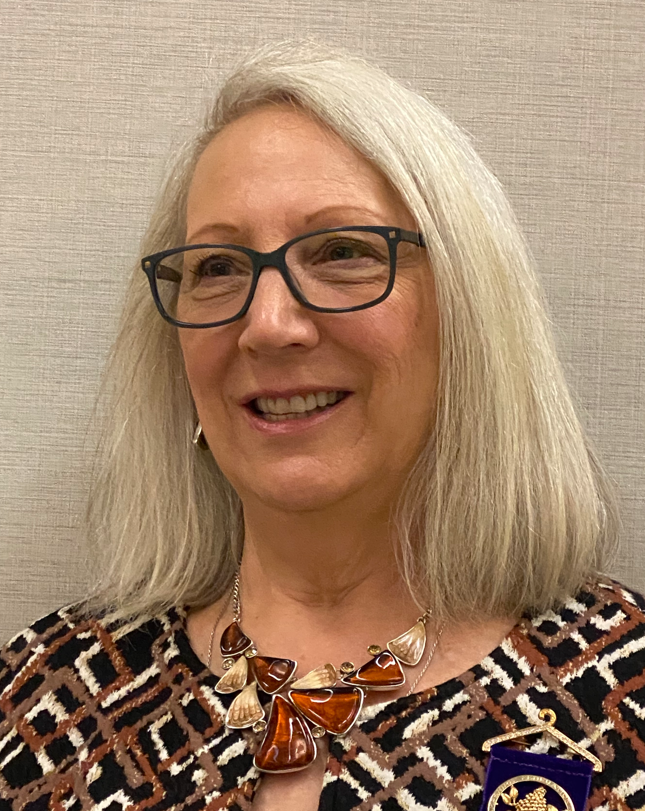
Susan Miner of Salem, NH, serves as the third vice president of the National Garden Clubs, Inc (NGC) with membership on the Executive and Finance Committees. She also chairs the NGC Organizational Study Committee and Award of Excellence Committee (an initiative to recognize outstanding non-member individuals and organizations that advance the NGC mission). She works to advance NGC’s mission “to provide education, resources, and national networking opportunities for its members to promote the love of gardening, floral design, and civic and environmental responsibility.” She also promotes the environmental mission of National Garden Clubs, Inc., which is “to review the environmental problems and their possible solutions, to promote environmental literacy and to advocate sound environmental stewardship.” In addition, she has completed two of the four courses in NGC’s Environmental School with the goal of becoming an NGC Environmental Consultant.
As an NGC Executive Committee member, she represented the organization’s New England Garden Clubs, Inc. (NEGC), where she served as Region Director from 2023 to 2025 and on the NGC Scholarship Committee. In addition, Susan was president of The New Hampshire Federation of Garden Clubs, Inc. (NHFGC), from 2019-2023. She also served in a number of other roles in NEGC and NHFGC and has been a member of the Atkinson Garden Club of Atkinson, NH, for over 30 years.
Susan holds a Bachelor of Science in Electrical Engineering from Valparaiso University in Indiana and an MBA from Rivier University in New Hampshire. Her work experience is in the Electronic Test and Measurement field as well as Fluid Power and Factory Automation. She has found her education and work experience to be invaluable in her various leadership and management roles as well as understanding advances in horticulture technology.

(484) 798-5934
Jazmin joins Seed Your Future as Executive Director with over a decade of change and systems management experience. With a solid knowledge of associations and philanthropy, she will bring her skills and expertise in planning, leading, and managing development projects and programs to the movement. She has experience in a broad range of nonprofit organizations, including those focused on crisis support, youth development, and workforce development.
Before taking on her role at Seed Your Future, Jazmin gained experience in volunteer development and created diverse, equitable, and inclusive communities within the camp industry as the Eastern Region Director at the American Camp Association.
Jazmin will lead Seed Your Future's next phase of growth, promoting horticulture, floriculture, and agriculture, and the nationwide expansion of career development opportunities with plants.