#IAmHorticulture
October 02, 2026
 A simple message permeated Seed Your Future’s Seed to STEM teacher training program: the future of the horticulture industry isn’t relegated solely to science classrooms.
Artists, writers, engineers, sports enthusiasts, chefs and more all shape the horticulture industry, meaning the next generation needs to be found among interested students in all these areas.
In its second year, the Seed to STEM immersive experience aimed to extend its reach by purposefully reaching out to a broader swath of teachers, both in its recruitment of teachers to the annual program and in the aftermath through a teacher mentoring component. The program’s goal remains to train high school teachers on incorporating horticulture career paths into their curriculums and lesson plans. To expand its reach, the program selected traditional science teachers, along with those dedicated to other disciplines.
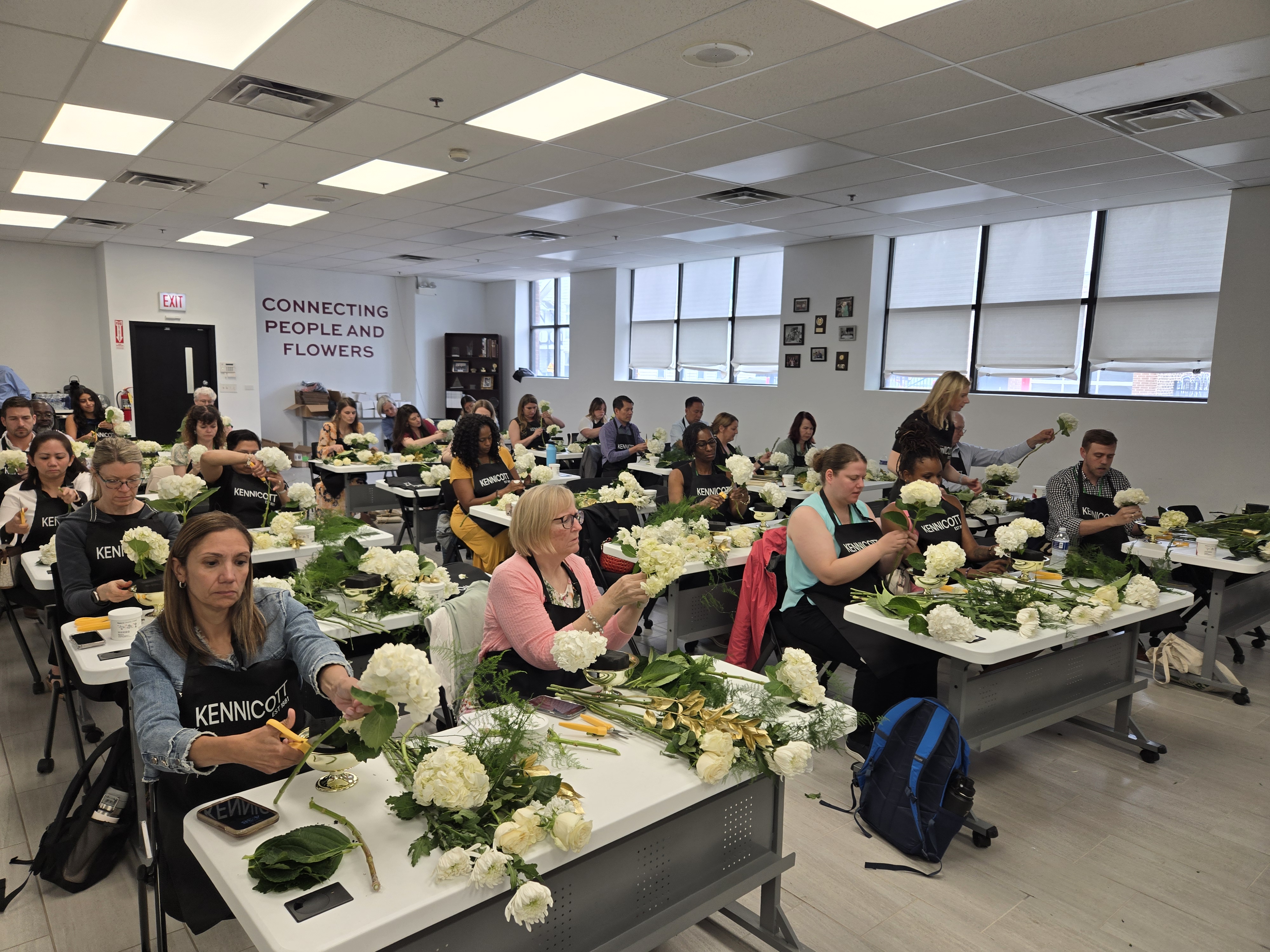
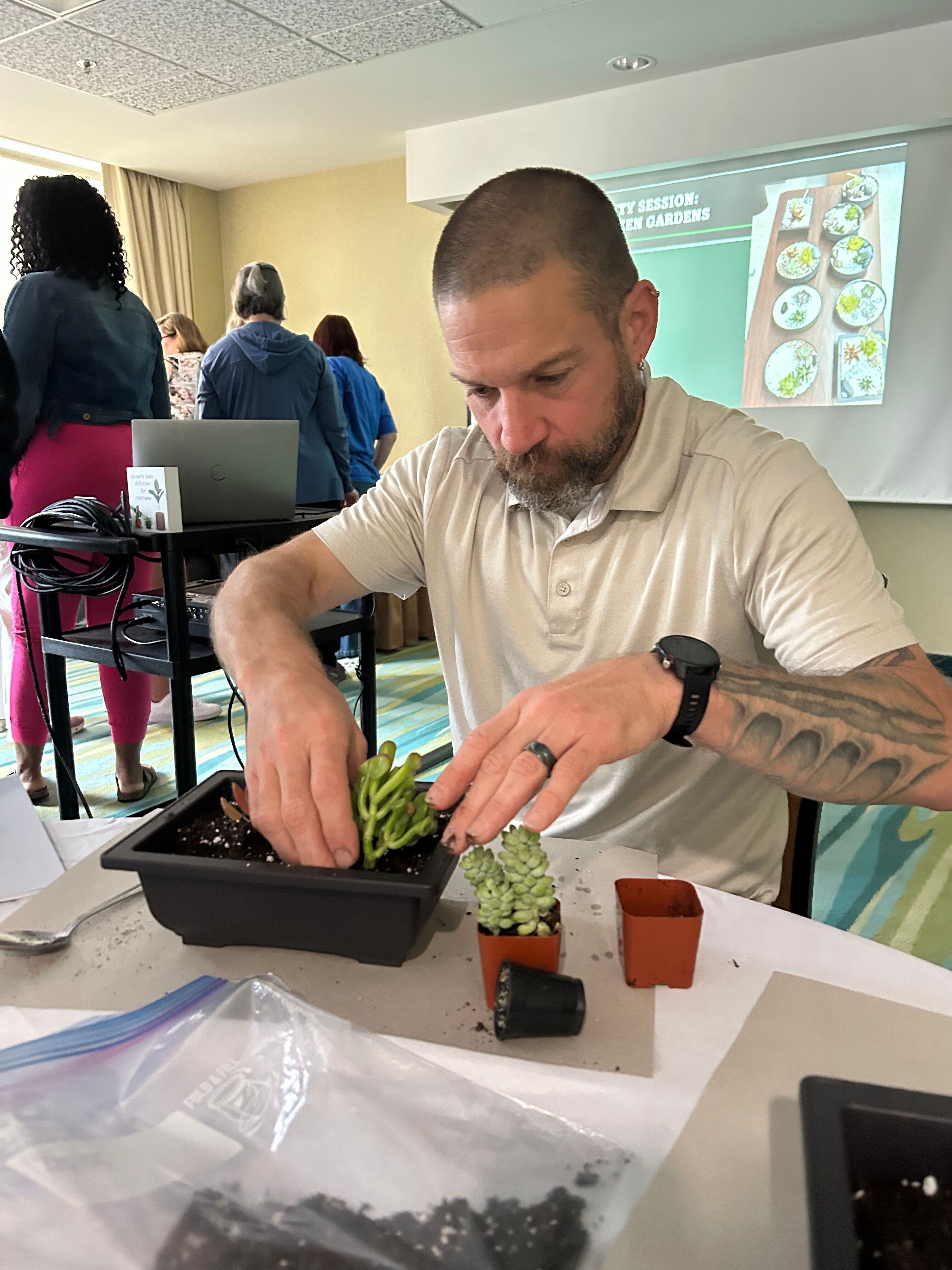
Business, art, technology and English teachers joined a cadre of high school teachers for a week in Chicago, connecting with the real-world applications of plant science and seeing the diverse career pathways within the industry. They made Zen Gardens, visited giants in the industry – Kennicott Brothers, Ball Horticultural Company and Midwest Groundcovers – and explored first-hand the intricacies of turf management at Impact Field, home of the Chicago Dogs minor league baseball team.
All walked away energized with ways to include the experience in their lesson plans to engage students, and share resources, including industry connections, with their colleagues back home.
Inspired Lesson Plans
 As part of the experience each teacher participant provides a lesson plan that is shared on Seed Your Future’s website. These lesson plans are available for free for any teacher to use. Last year’s lessons have already been downloaded by more than 1,200 other educators.
Danielle Farley took inspiration for her lesson plan during the group’s visit to the wholesaler, Kennicott Brothers. There she connected with the symbolism of different flowers. Farley and her colleagues were learning how to make floral arrangements using cut flowers and the instructor mentioned the different meanings assigned to different flowers. Red roses for love; poppies for death.
“There is so much different symbolism in different flowers,” Farley, an art teacher at Lankenau Environmental Science High School in Philadelphia, Penn., explained. “It got me thinking about interpreting art through symbolism. There is a lot of symbolism in art history and I was interested in learning about what the different flowers mean.”
Since returning from Chicago, she’s started to develop a lesson plan that taps into this idea. She’s planning to have students explore Dutch still life paintings and investigate the different meanings behind the flowers. She’s also found resources that tie into career paths, including a floral designer at the Metropolitan Museum of Art in New York.
Alex Henz, a teacher at Global Impact STEM Academy in Springfield, Ohio, says he’s revamping his lesson plans to incorporate the horticulture theme into what he’s already been doing with his STEM students. He’s even thinking of renaming his class to have the focus be on horticulture, using that theme to tie in the things he’s already been teaching: graphic design, IT data skills, mechanical engineering.
“I’ve been revamping my entire class layout,” he said. “I see it differently now. I’m trying to think of it as a horticulture class, with all these STEM things imbedded.”
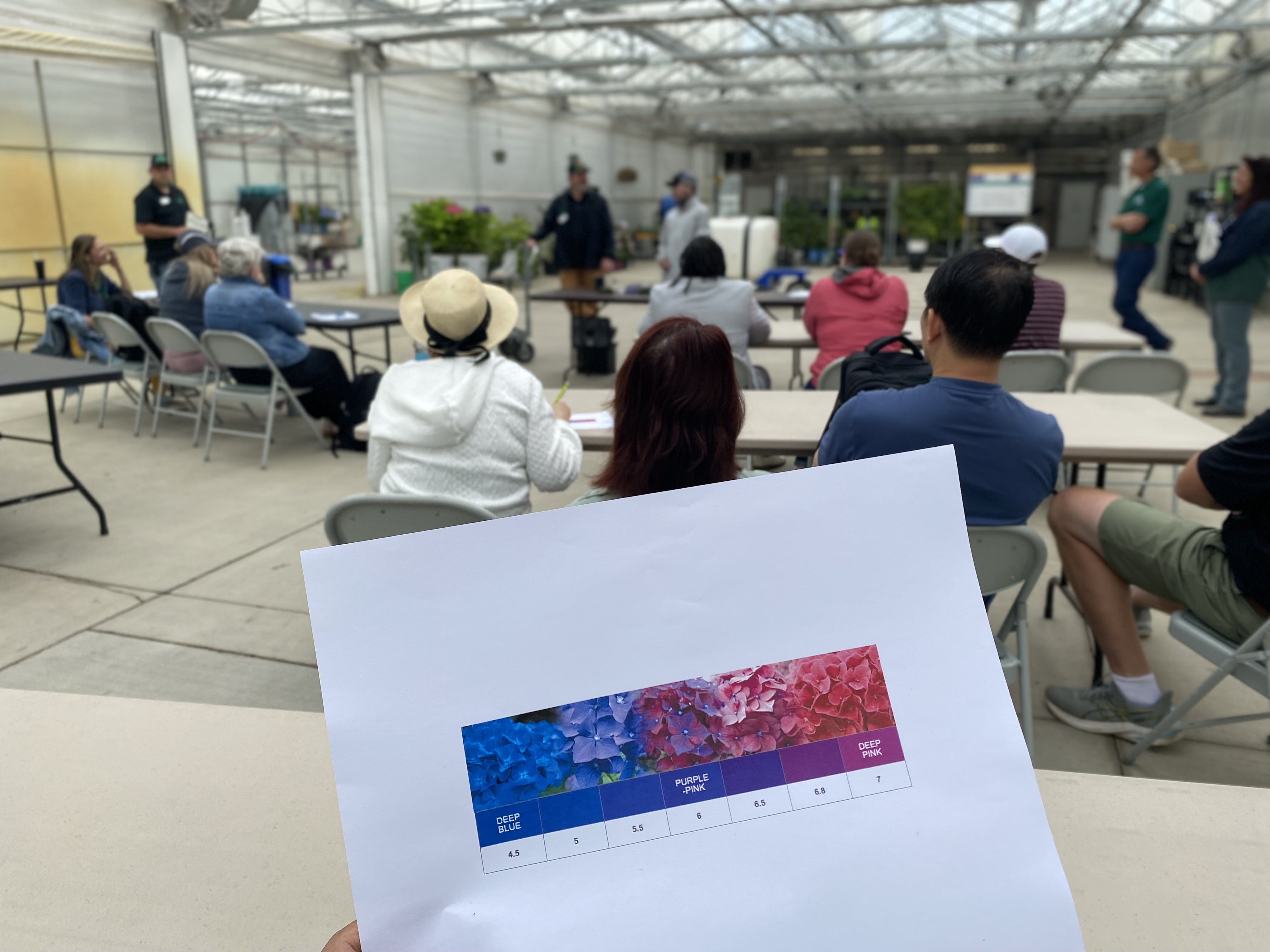
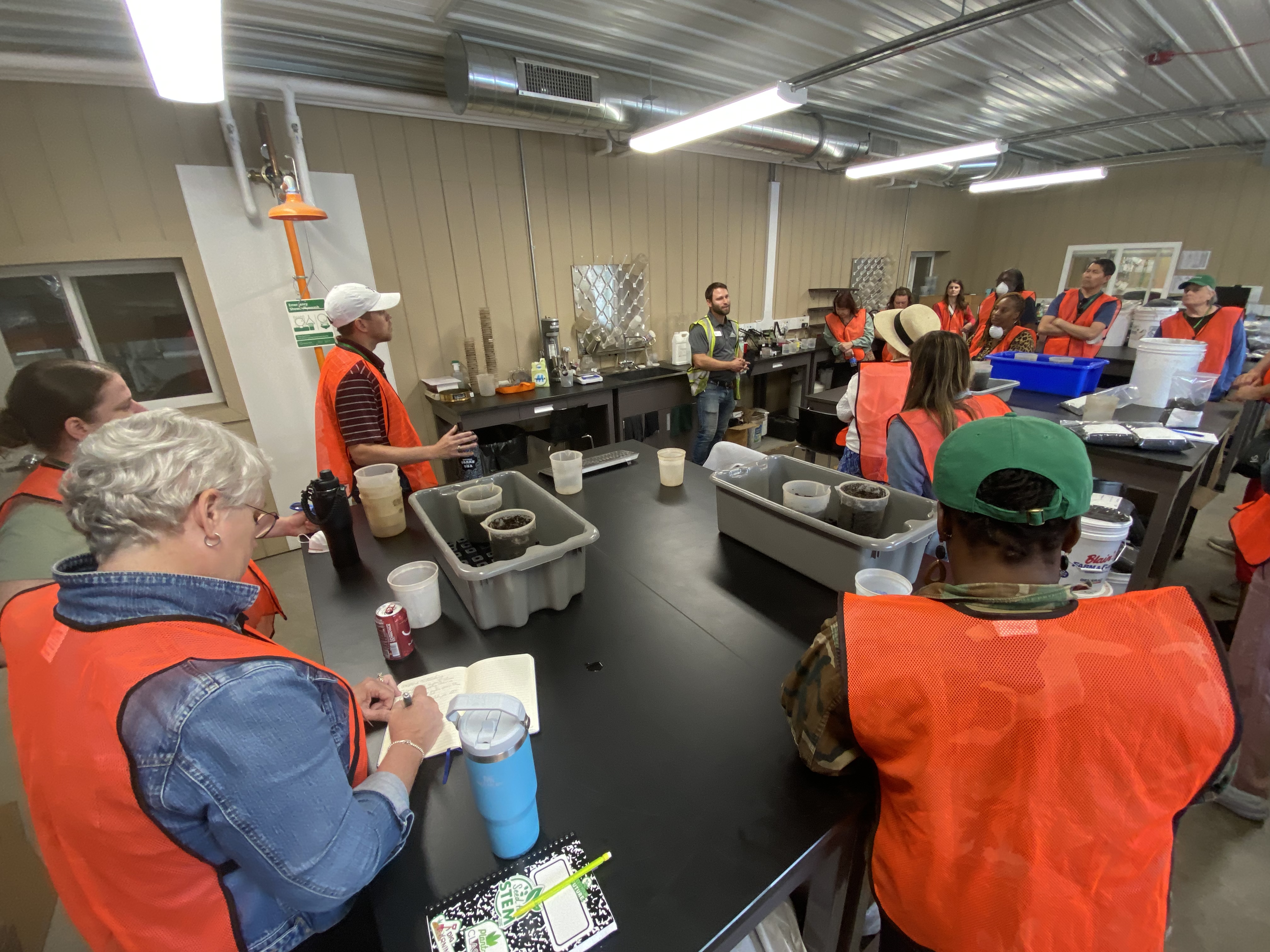
One lesson plan he’s planning is inspired by the trip they took to Midwest Groundcovers where they learned about the science behind potting mixes. He was fascinated by the quality control testing. Last year, he had students design their own potting mix, but they never tested the soil. This year, he’s going to add testing to a lesson on quality control, looking at the PH levels and the bulk density of the soil.
“People think it is gardening and throwing plants in dirt, but there is a science behind it, and I can show the students the different careers that exist and what jobs they could explore,” he said. “I’m really going to beef things up.”
Connecting to Industry
Visiting various professionals working in the horticulture industry didn’t just lead to lesson plans, but also to ideas for reaching out to local professionals.
Joy Douglas immediately realized she could replicate the group’s visit to the baseball field by using her school’s established connection to the Washington Commanders Football team.
“We win football championships,” explained Douglas, a health and environmental science teacher at Friendship Collegiate Academy in Washington, DC. “It’s a big sports school.”
She’s eager to set up a tour of the Commanders’ football field where they can focus on the turf science. She plans to delve into the types of grass, the chemical components, the role of fertilizers and the various groundskeeping roles.
 The introduction to Anna Ball, President and CEO of Ball Horticulture, was enough to get Liz Anstine thinking about connections she can make in her home state of Kansas. Ball made the introduction between Anstine, who is the Kansas teacher of the year, and Family Tree Nursery, and family run business in Overland Park, KS.
Anstine, who is starting at a new school this year, plans to use the connection to support her efforts in teaching students who develop business plans. She’s hoping to form a partnership that not only can help with setting up an operational greenhouse but also give students insights into the career pathways for starting and running a business. She wants to work with teachers in her new school’s culinary arts program as well as science teachers on the farm to table management of sustainability and food production.
“I am very project based, and so we can do some hands-on work with the greenhouse, we can tour with a nursery, and we can work with the culinary teachers on the importance of using fresh produce and what does that involve,” she said.
Sharing Insights with Colleagues
It’s that intradisciplinary effort that Seed to STEM hopes to inspire in teachers and one that Shawn Hearn, of Savannah High School of Liberal Studies in Savannah, Ga. is focused on achieving.
Hearn is behind a well-established school garden that already has a lasting impact on the students at the school. Last year alone the garden gave away 300 pounds of produce to the community, while having students earn community service hours and lessons in everything from aquaponics and sustainable food production to sensory gardens and pollinator gardening.
“We nail all the academic pieces and social emotional pieces, and how to integrate those in with the horticulture pieces,” Hearn said. “What I’m going to do with this the Seed to STEM program is add the career pieces. We are going to be putting in and adding in consistently, the career connections.”
He’s combing through existing lesson plans to show what career and job paths apply to each aspect of the already thriving program, and then he is going to share those parts with the other teachers within the school.
“We’ve had career exploration pieces as more of a separate thing, rather than including it into the lessons,” he said. “By starting to make the connections to careers during the lessons the students can start to think about how what they are doing is not only applicable to subject area, but also applicable to a future career.”
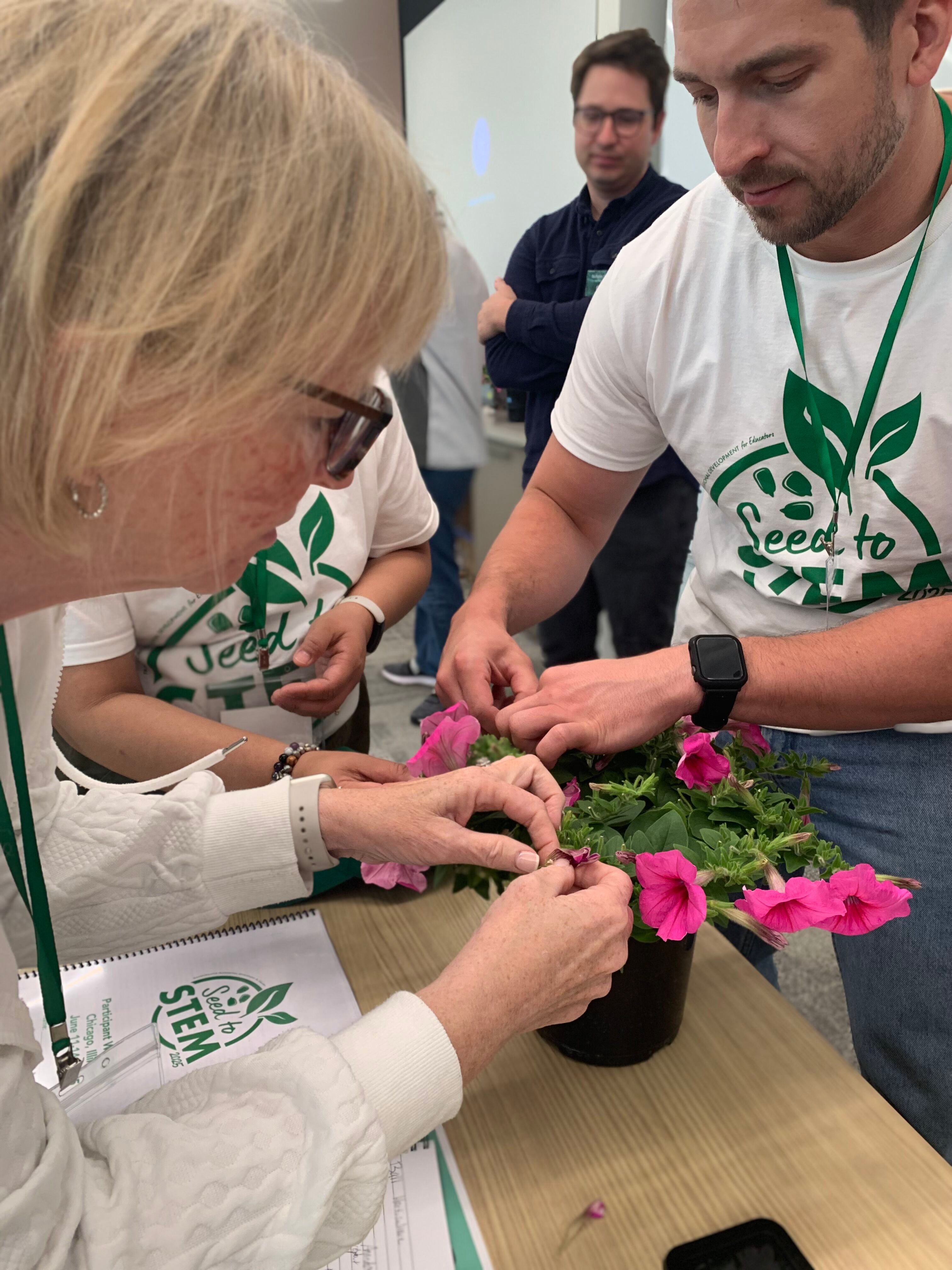 For Douglas there was also a moment when she realized that the horticulture lessons might be useful in the personal lives of teachers, not just as a tool for inspiring young students. On the last day, Kelly Warnick, president-elect of the American Horticultural Therapy Association Teachers, took the cohort through creating their own Zen Garden. Each teacher chose the rocks and plants that they wanted. They learned through the hands-on practice about plant therapy as a tool for stress relief.
“That’s definitely something I’m going to do at the beginning of the school year for professional development,” she said. “I’m going to have staff make Zen Gardens. It’s good for kids and staff to learn about stress relief.”
The Seed to STEM program continues to prove that horticulture is more than plants – it’s a dynamic, interdisciplinary field full of opportunities for creativity, innovation, and connection. By equipping teachers with firsthand experiences, industry access, and actionable tools, Seed Your Future is planting the seeds of inspiration in classrooms across the country. As these educators return home and begin weaving horticulture into everything from art and business to STEM and wellness, they’re helping students not only discover new career paths – but also see how working with plants can shape a more sustainable, meaningful future.
- Sarah Sampson is a contributing writer for Seed Your Future.